VigorHorse Official Website › Blog › L-Arginine And The Gram Problem
L-Arginine And The Gram Problem
The mechanism is textbook and the chemistry is not in dispute. The entire question is how much, and the answer has been measured twice in opposite directions.
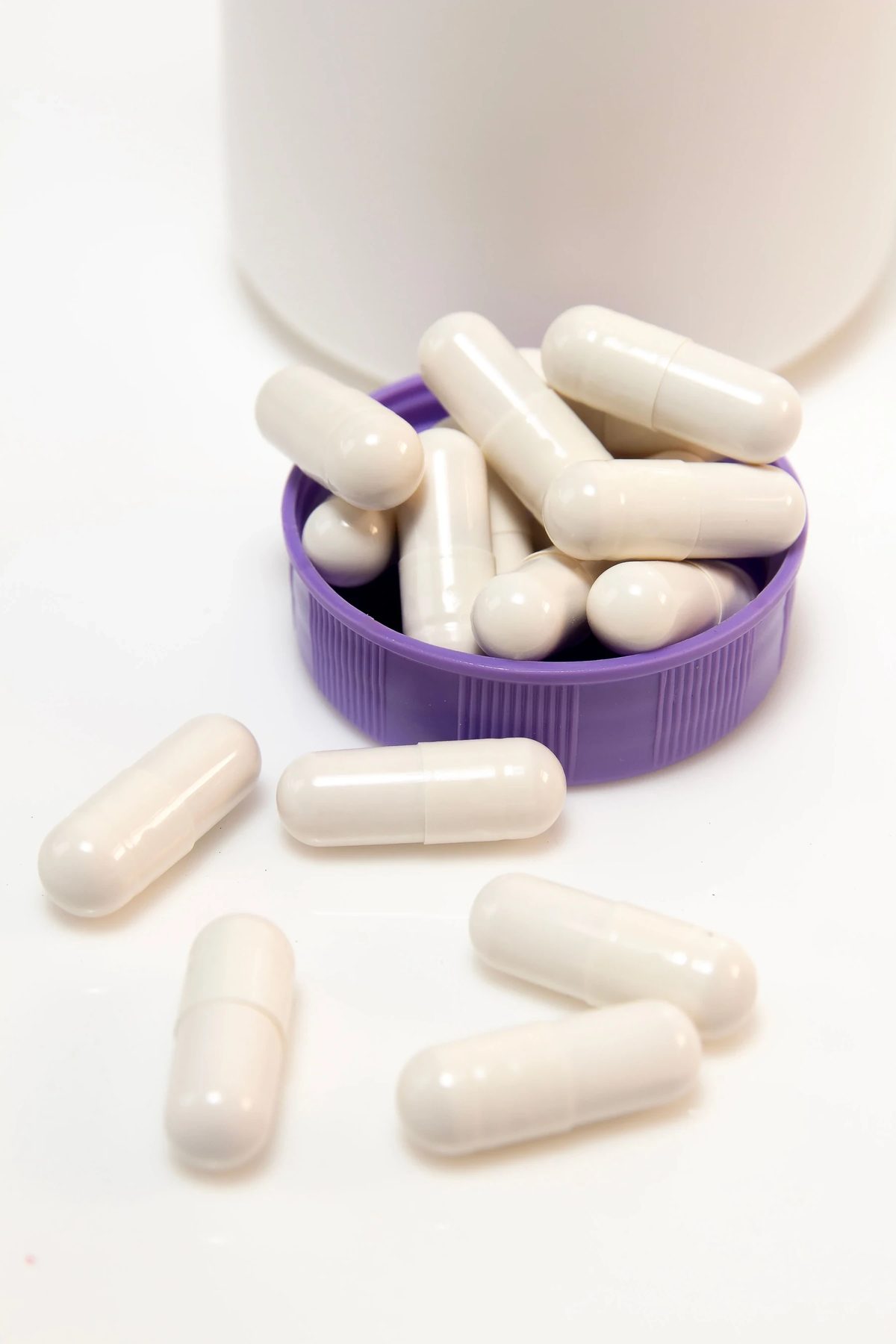
- L-arginine is an amino acid the body converts into nitric oxide, which relaxes the muscle layer in blood-vessel walls.
- The mechanism is uncontested. It is the same chemistry described in every physiology textbook.
- One trial used 5,000 mg a day for six weeks and reported a benefit. A separate crossover at 1,500 mg a day found nothing.
- Blood pressure moved only at 4,000 mg a day and above in the dose-response work, which is the clearest scale marker in the literature.
- An ordinary chicken breast carries roughly 2 g, which is more arginine than most blend lines weigh in total.
What L-arginine is, and why it is not a herb
Every other name on a typical male vitality label is a plant. L-arginine is not. It is one of the twenty amino acids that make up protein, it is present in every protein-containing food, and the body makes some of its own.
That changes the analysis completely. A botanical extract is a mixture whose active constituents may be uncertain and whose content varies with growing conditions and processing. An amino acid is a single defined molecule. There is no standardisation question, no plant-part question and no extract-ratio question.
Which means the only question left is the amount, and that is also the hardest one for a small supplement format to answer well.
The mechanism, in three steps
- Arginine is the substrate for nitric oxide synthase, the enzyme that produces nitric oxide.
- Nitric oxide diffuses into the smooth muscle layer of blood-vessel walls and triggers relaxation.
- Relaxed vessel walls widen, which is what vasodilation means and why the pathway is interesting in this category at all.
There is nothing controversial in any of those three steps. This is the same pathway that underlies a great deal of cardiovascular physiology and it is the reason arginine appears on labels far outside this aisle.
What a clean mechanism does not settle is whether swallowing more of the substrate produces more of the product. Enzymes saturate, the body regulates its own pools, and the only way to find out is to give people a stated amount and measure something.
What the trials actually used
They did exactly that, and the answers cluster at one end of the scale.
| Study | Daily L-arginine | Duration | Result |
|---|---|---|---|
| The trial that worked | 5,000 mg | 6 weeks | Improvement against placebo |
| The low-dose crossover | 1,500 mg, as 3 x 500 mg | Crossover | No better than placebo |
| The pooled meta-analysis | 1,500 to 5,000 mg | Various | Benefit across the pooled range, weighted by the higher doses |
| The blood-pressure dose-response work | 4,000 mg and above | Various | Pressure moved only at the upper end |
| The pycnogenol combination | 1,700 mg, with 80 to 120 mg pycnogenol | Months | Improvement reported for the combination, not for arginine alone |
Doses as the abstracts state them. Every figure is in thousands of milligrams.
The trial that worked used 5,000 mg a day over six weeks. The crossover at 1,500 mg a day, given as three 500 mg doses, performed no better than placebo. Those two numbers, from two separate studies, bracket the whole practical question.
The pooled meta-analysis spans 1,500 to 5,000 mg a day and reports benefit across the range, which is a pooled figure weighted towards the trials at the upper end. The blood-pressure dose-response analysis is the cleanest scale marker in the literature: pressure moved at 4,000 mg a day and above.
Four grams a day is roughly where measurable effects begin appearing in this literature. Not four hundred milligrams, and not forty. Every figure in this field is in grams, and that single fact places almost every product in the category.
Why an amino acid is hard to put in a gummy
This is a physical problem before it is a marketing one, and it explains why arginine appears on so many labels at amounts that cannot do anything.
Five grams of anything is a lot of material. It is a heaped teaspoon of powder. A capsule holds a few hundred milligrams of a dense powder at most, so a five-gram daily dose of arginine is eight to ten large capsules, or a scoop of powder in water.
A gummy has far less room than a capsule. Most of its mass is the pectin, syrup and sugar that make it a gummy, and the active load it can carry before it stops being edible is small. A product that wanted to deliver a trial dose of arginine could not do it in a sweet.
- A powder is the only format that carries five grams comfortably, which is why bodybuilding arginine is sold in tubs.
- Capsules can do it at eight to ten a day, which most people will not sustain.
- A gummy cannot, and a gummy carrying a share of a double-digit milligram blend is not attempting to.
- Naming it is still not dishonest, as long as nobody borrows the 5,000 mg trial to describe what is in the sweet.
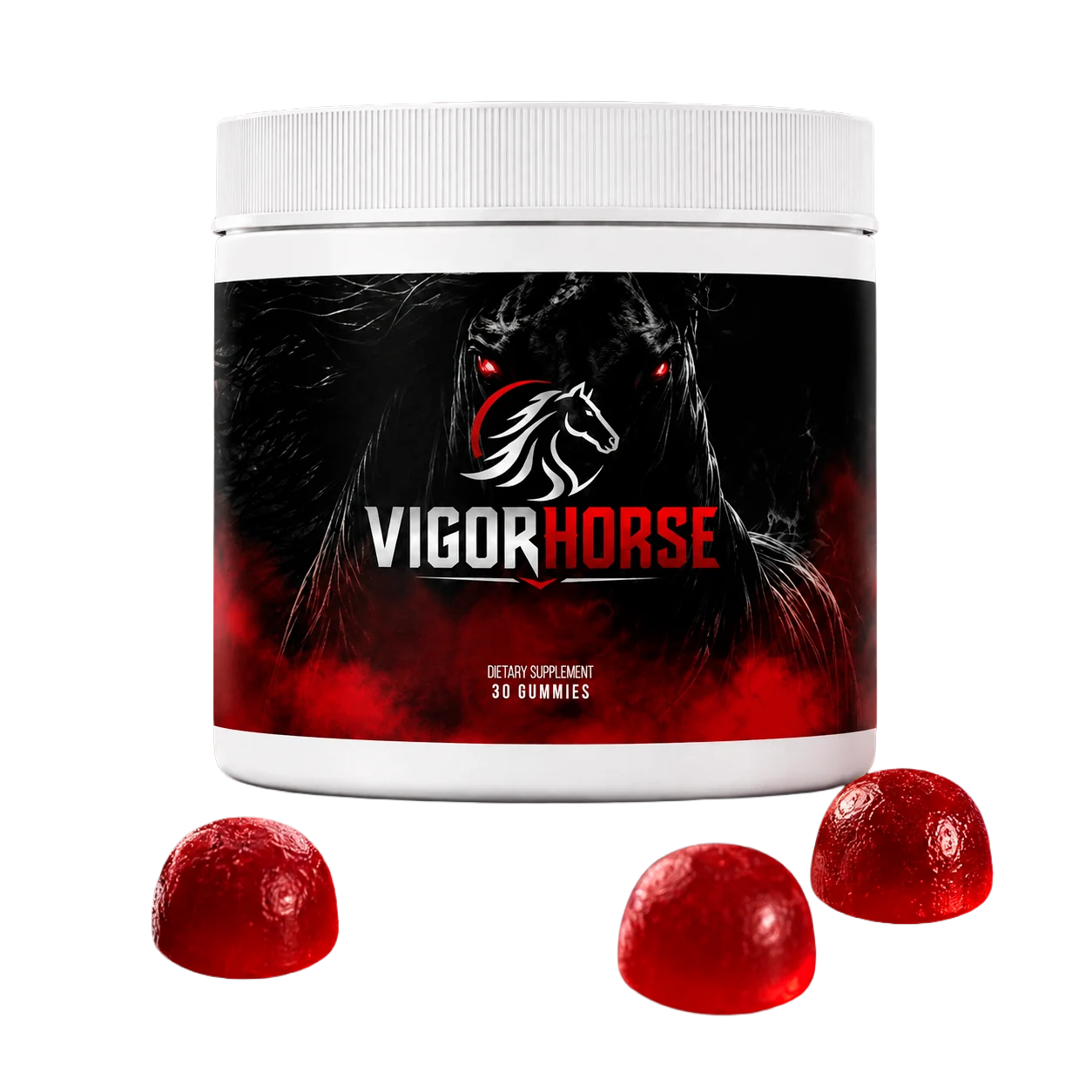
See where L-arginine sits on the VigorHorse label
Seventh of 9 names, behind the printed 5 mg caffeine line, which caps it at 5 mg or less. The whole panel is transcribed on this website.
One jar $89 · six jars $294 · 60-day money-back guarantee
Order VigorHorse On The Official WebsiteOne gummy a day · 30 per jar · lot VIG-26/MY-7014
The comparison nobody makes
Because arginine is a dietary amino acid rather than an exotic extract, there is a scale comparison available that no botanical has.
| Everyday source | Rough L-arginine content | Against the 5,000 mg trial dose |
|---|---|---|
| A chicken breast | Roughly 2 g | Around two fifths of it, from one meal |
| A cup of pumpkin seeds | Several grams | Comparable to the whole trial dose |
| A tin of tuna | Roughly 1.5 g | Around a third |
| A shared 82 mg blend line | A fraction of 82 mg | Under two per cent of the trial dose, before the blend is divided |
Food figures are approximate and vary by portion and preparation. They are here for scale rather than as a nutrition table.
A chicken breast carries something in the region of two grams of arginine. That is not a supplement dose in a technical sense, and it is more arginine than a typical blend line weighs in total, before the blend is divided among its members.
The practical consequence is a genuinely useful one for a reader. Anybody eating an ordinary amount of protein is already taking in several grams of arginine a day from food, and a few milligrams from a sweet is not a meaningful addition to that pool.
This is the clearest example in the whole category of an ingredient whose presence on a label is a signal rather than a dose. It tells you the formulator was thinking about the nitric oxide pathway, which is a reasonable thing to be thinking about.
The combination trials, and why they complicate things
The arginine and pycnogenol work is the study most often used to argue that a smaller arginine dose can work in company. It used 1,700 mg a day of L-arginine alongside 80 to 120 mg of pycnogenol, a pine bark extract, and reported improvement.
Two things about that result are worth holding together. It is a combination trial, so the effect attaches to the pair rather than to the arginine, and 1,700 mg is still well above anything a blend line delivers. A product would need both components at those amounts to be citing it fairly.
A 2024 network meta-analysis of nutraceutical interventions in this area is the wider context, and it reaches the conclusion the whole field reaches: a real signal for some interventions, at doses that are stated, in trials that are mostly small.
What a small amount of arginine is and is not
- It is not a dishonest ingredient. The mechanism is real, the molecule is exactly what the label says, and there is no standardisation to fudge.
- It is not a route to the trial result. Five grams a day is the published amount and no sweet delivers it.
- It is not dangerous at these amounts either. Blood pressure moved only at 4,000 mg a day and above, so a few milligrams is nowhere near any interaction concern.
- It is still worth naming on a label, because it tells you which pathway the formulator had in mind.
- And it is worth buying separately if the pathway is what you actually want. Bulk arginine powder is inexpensive, measurable and sold everywhere.
Anybody taking a nitrate for angina is taking a drug that acts on the same nitric oxide pathway, and that pairing is worth mentioning to whoever prescribes it. It is the single most specific interaction on a label of this kind, and naming it once is better than hedging about it five times.
The gram problem is not solvable inside a chewable format, and a label that names arginine is not claiming to have solved it. Reading it as a pathway signal rather than as a dose is the accurate way to take it.
References
- Chen J, Wollman Y, Chernichovsky T, et al. Effect of oral administration of high-dose nitric oxide donor L-arginine in men with organic erectile dysfunction: results of a double-blind, randomized, placebo-controlled study. BJU Int. 1999;83(3):269-73. PMID 10233492. https://pubmed.ncbi.nlm.nih.gov/10233492/
- Klotz T, Mathers MJ, Braun M, et al. Effectiveness of oral L-arginine in first-line treatment of erectile dysfunction in a controlled crossover study. Urol Int. 1999;63(4):220-3. PMID 10743698. https://pubmed.ncbi.nlm.nih.gov/10743698/
- Rhim HC, Kim MS, Park YJ, et al. The Potential Role of Arginine Supplements on Erectile Dysfunction: A Systemic Review and Meta-Analysis. J Sex Med. 2019;16(2):223-234. PMID 30770070. https://pubmed.ncbi.nlm.nih.gov/30770070/
- Shiraseb F, Asbaghi O, Bagheri R, et al. Effect of l-Arginine Supplementation on Blood Pressure in Adults: A Systematic Review and Dose-Response Meta-analysis of Randomized Clinical Trials. Adv Nutr. 2022;13(4):1226-1242. PMID 34967840. https://pubmed.ncbi.nlm.nih.gov/34967840/
- Stanislavov R, Nikolova V. Treatment of erectile dysfunction with pycnogenol and L-arginine. J Sex Marital Ther. 2003;29(3):207-13. PMID 12851125. https://pubmed.ncbi.nlm.nih.gov/12851125/
- Barbonetti A, Tienforti D, Antolini F, et al. Nutraceutical interventions for erectile dysfunction: a systematic review and network meta-analysis. J Sex Med. 2024;21(11):1054-1063. PMID 39279185. https://pubmed.ncbi.nlm.nih.gov/39279185/