VigorHorse Official Website › Blog › Maca: The Dose That Worked
Maca: The Dose That Worked, And The One That Did Not
One study gave two different amounts of the same root to two groups and only one group changed. That single result explains more about this category than any other trial in it.
- Maca has randomised, placebo-controlled human trials behind it, which most of this category does not.
- The 2002 trial reported a rise in self-rated sexual desire from week eight, at 1,500 to 3,000 mg a day.
- The same work measured reproductive hormones and found no change, so the result is real and not hormonal.
- A dose-finding study compared 3.0 g a day against 1.5 g a day and found the higher arm worked while the lower one did not.
- Every dose in every trial is measured in grams, which is the single fact that decides what a milligram-scale blend line can claim.
What maca actually is
Lepidium meyenii is a root vegetable in the mustard family, grown on the Peruvian altiplano above 4,000 metres, where very little else survives. It has been eaten as food rather than as medicine for a very long time, which matters: a plant with a culinary history has an informal safety record that a purely medicinal herb does not.
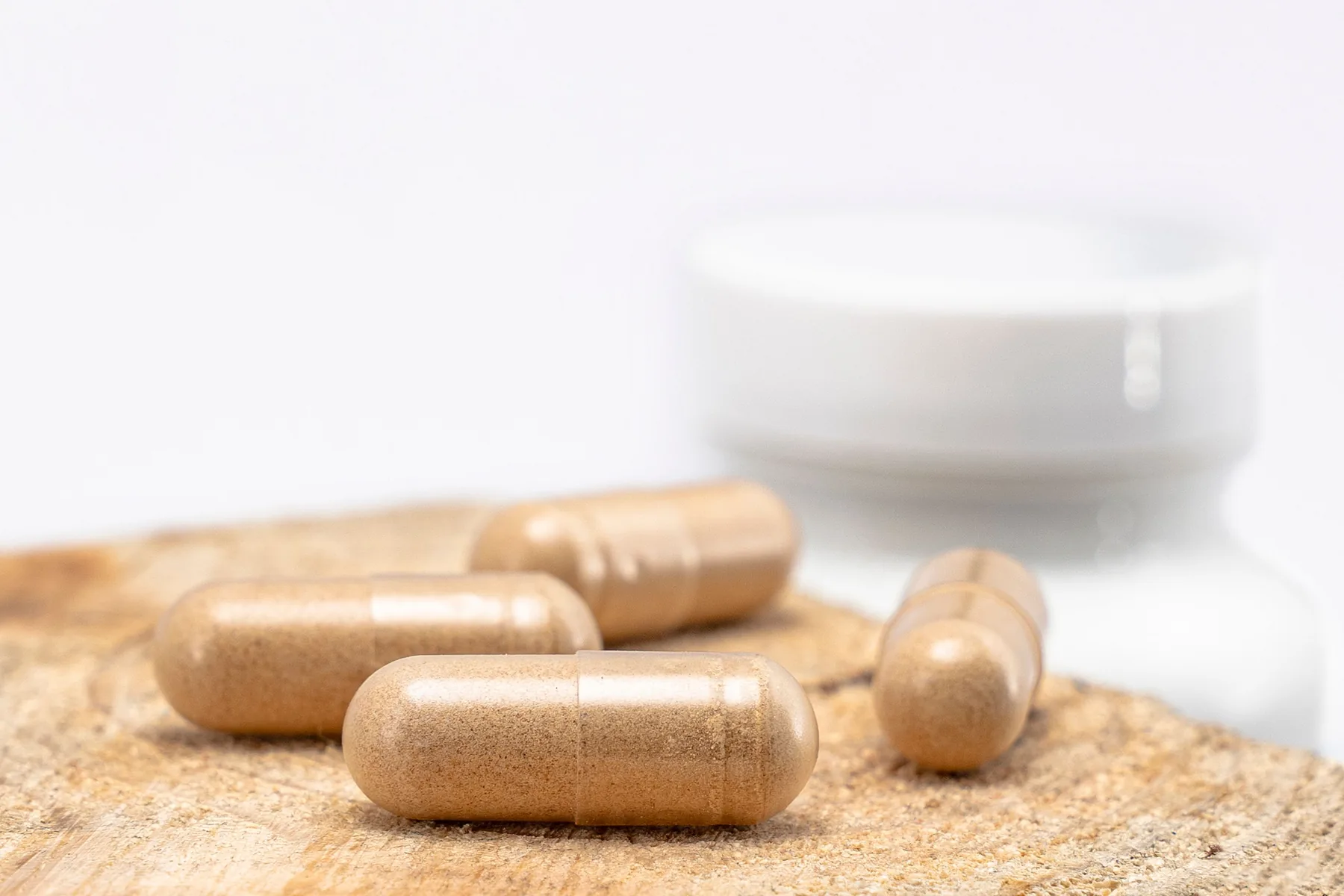
It reaches a supplement label as dried milled root or as a concentrated extract, and the two are not interchangeable by weight. Most of the trial literature used dried root powder or a characterised extract at a stated amount, which is why the dose figures below are worth reading carefully.
Why it appears on almost every jar in this category
Because it is one of a very small number of ingredients here with randomised, placebo-controlled human evidence for anything related to desire. A 2020 review of aphrodisiac ingredients sorts the category that way, and the list of names with genuine trial support is short.
The trial that put it on this shelf
The 2002 trial is the one everybody cites and it is worth describing properly rather than summarising. Healthy adult men received 1,500 mg or 3,000 mg of maca a day, or placebo, for twelve weeks. Self-rated sexual desire was measured on standardised questionnaires at intervals.
The result was an improvement in self-rated desire in the maca groups, appearing from around week eight and holding to week twelve. It is a subjective endpoint, measured with an instrument designed for the purpose, against a placebo group. That is a legitimate way to measure something that is, in the end, subjective.
| Trial | Daily dose | Duration | What it reported |
|---|---|---|---|
| The 2002 desire trial | 1,500 mg or 3,000 mg | 12 weeks | Self-rated sexual desire rose from week eight, with no change in testosterone |
| The hormone arm of the same work | 1,500 mg or 3,000 mg | 12 weeks | No reproductive hormone changed |
| The dose-finding study | 1,500 mg against 3,000 mg | 12 weeks | 3.0 g a day moved the outcome; 1.5 g a day did not |
| The 2009 mild-ED trial | 2,400 mg of dry extract | 12 weeks | Improvement on subjective measures of well-being and performance |
| The systematic review | Pooled across the above | Various | Evidence limited in quantity, positive in direction |
Doses as the abstracts state them. Every figure in the second column is in grams or in thousands of milligrams.
A 2009 trial in men with mild erectile dysfunction used 2,400 mg a day of dry extract over twelve weeks and reported improvement on subjective measures. The systematic review pooled what existed and called the evidence limited in quantity but positive in direction, which is a fair summary and more cautious than any sales page has ever been.
The part that gets left out
Maca is frequently sold beside a hormonal story, and the research that made it famous measured hormones and found nothing.
The hormone arm of the 2002 work gave the same 1,500 and 3,000 mg a day and measured reproductive hormones. Nothing changed. The desire result happened anyway, in the same participants, over the same twelve weeks.
That is a more interesting finding than a hormonal one would have been. It says the mechanism is not the obvious one, and it puts a boundary on what any product containing maca can honestly claim.
A product describing maca as a testosterone ingredient is describing something the measurements did not find. The 2002 work reported a desire change with no hormone change, which is the opposite of the usual marketing story.
Two doses, one study, one result
The dose-finding study is the most useful trial in this entire category and it is barely ever cited by anybody selling anything.
It ran two arms, 1.5 g a day and 3.0 g a day, in the same study, with the same protocol and the same measurement. The 3.0 g arm moved its outcome. The 1.5 g arm did not.
Same plant. Same preparation. Same twelve weeks. Same questionnaire. Twofold difference in amount, and one arm produced a result while the other did not.
Why a threshold is not a gradient
Most people read a dose as a dial. Half the amount, half the effect; a tenth of the amount, a tenth of the effect. It is an intuitive model and in this category it is usually wrong.
What the dose-finding study describes is a threshold. Below a certain amount the published result is not a smaller version of itself. It is absent. The 1.5 g arm did not produce a modest change that failed to reach significance in an interesting way; it behaved like a group that had taken nothing.
- A gradient would mean 750 mg produces a quarter of what 3,000 mg produces. Nothing in this literature supports that reading.
- A threshold means there is a line, and below it the published evidence says nothing about what happens.
- The honest consequence is that a product below the failing arm is not weakly supported by these trials. It is outside what they tested.
- The same shape appears elsewhere. L-arginine worked at 5,000 mg a day and failed at 1,500 mg a day, in separate trials, with the same structure.
- It cuts both ways. A threshold also means that reaching the amount is the whole requirement, and 3.0 g of maca is cheap and widely sold.
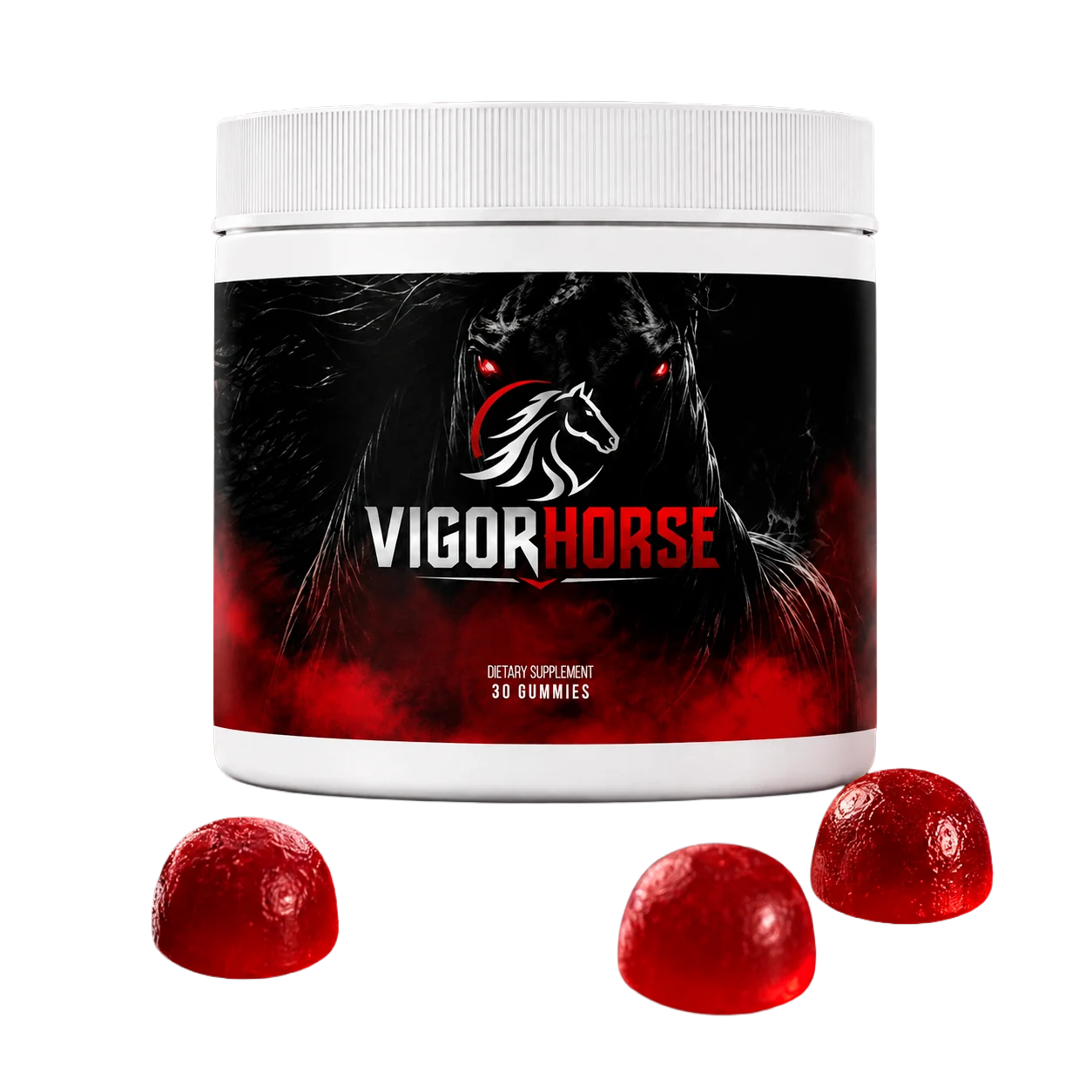
See what the VigorHorse label prints about maca
Second on a 82 mg blend line, so it weighs no more than muira puama and at least as much as catuaba. The panel is transcribed in full on this website.
One jar $89 · six jars $294 · 60-day money-back guarantee
Order VigorHorse On The Official WebsiteOne gummy a day · 30 per jar · lot VIG-26/MY-7014
What that means for a blend line
Set the trial doses beside what a shared blend total can supply and the arithmetic does itself.
| What the maca research used | What a shared blend line can supply | |
|---|---|---|
| The unit | Grams | A share of a total measured in tens of milligrams |
| The threshold | 3.0 g a day worked. 1.5 g a day did not | Below the arm that failed, not between the two arms |
| The duration | Twelve weeks in every trial | Whatever the buyer sustains, which one jar cannot reach |
| What was measured | Self-rated desire, on a questionnaire, against placebo | Nothing. No trial has tested a finished blend product |
The left column is the published protocol. The right column is what a blend format can support, and the two are not commensurable.
On the panel this website describes, maca sits second of 9 names inside a 82 mg total. Rank two means it weighs no more than muira puama and at least as much as catuaba. Even if maca were the entire blend, 82 mg is a twentieth of the 1.5 g arm that produced nothing.
Taking the label's own extract-equivalence footnote at face value and calling the blend roughly 567 mg of dry powders does not close that gap either. Divided nine ways it is about 63 mg a name, against a failing arm of 1,500 mg.
That comparison is arithmetic on published numbers. It is not a prediction that nothing will happen, and it is not a claim that the ingredient is inert. It is a statement about which evidence applies.
What maca is not being accused of
It would be easy to read all of the above as an attack on the ingredient, and it is the opposite. Maca has more supportive randomised human evidence for desire than almost anything else in this aisle, it produced that evidence without a hormonal mechanism, and it has a long dietary history behind its safety profile.
The problem being described is a units problem, and it belongs to labels rather than to the plant. A product carrying three grams of maca a day would be squarely inside the evidence. Several exist, they are inexpensive, and anybody whose interest is specifically in maca should buy one of those instead of a blend.
What to do with all of this if you are buying
- Decide whether maca specifically is what you want. If it is, buy maca at 3.0 g a day and find out. That is the experiment the literature supports.
- If you want a routine rather than an experiment, a blend is a reasonable purchase and this arithmetic is not an argument against it. Just do not read it as a maca trial.
- Give it twelve weeks either way. Every positive maca trial ran twelve weeks and reported from around week eight.
- Write a baseline down on day one. The endpoint in these trials was a questionnaire, which is the formal version of exactly that.
- Do not expect a hormone change, because the trial that produced the desire result measured hormones and found none.
The single sentence worth carrying away is the one from the dose-finding study, and it applies well beyond maca: when a trial tests two amounts and only the larger one works, the smaller one is not a cheaper version of the result.
References
- Gonzales GF, Córdova A, Vega K, et al. Effect of Lepidium meyenii (MACA) on sexual desire and its absent relationship with serum testosterone levels in adult healthy men. Andrologia. 2002;34(6):367-72. PMID 12472620. https://pubmed.ncbi.nlm.nih.gov/12472620/
- Dording CM, Fisher L, Papakostas G, et al. A double-blind, randomized, pilot dose-finding study of maca root (L. meyenii) for the management of SSRI-induced sexual dysfunction. CNS Neurosci Ther. 2008;14(3):182-91. PMID 18801111. https://pubmed.ncbi.nlm.nih.gov/18801111/
- Gonzales GF, Córdova A, Vega K, et al. Effect of Lepidium meyenii (Maca), a root with aphrodisiac and fertility-enhancing properties, on serum reproductive hormone levels in adult healthy men. J Endocrinol. 2003;176(1):163-8. PMID 12525260. https://pubmed.ncbi.nlm.nih.gov/12525260/
- Shin BC, Lee MS, Yang EJ, et al. Maca (L. meyenii) for improving sexual function: a systematic review. BMC Complement Altern Med. 2010;10:44. PMID 20691074. https://pubmed.ncbi.nlm.nih.gov/20691074/
- Zenico T, Cicero AF, Valmorri L, et al. Subjective effects of Lepidium meyenii (Maca) extract on well-being and sexual performances in patients with mild erectile dysfunction: a randomised, double-blind clinical trial. Andrologia. 2009;41(2):95-9. PMID 19260845. https://pubmed.ncbi.nlm.nih.gov/19260845/
- Srivatsav A, Balasubramanian A, Pathak UI, et al. Efficacy and Safety of Common Ingredients in Aphrodisiacs Used for Erectile Dysfunction: A Review. Sex Med Rev. 2020;8(3):431-442. PMID 32139335. https://pubmed.ncbi.nlm.nih.gov/32139335/