VigorHorse Official Website › Blog › Icariin’s Absorption Problem
Icariin’s Absorption Problem
Horny goat weed’s marker compound, icariin, does inhibit an enzyme tied to blood flow — a separate article on this site covers that finding in rat tissue. This one asks a different question: after a person swallows it, does icariin itself ever reach the bloodstream intact? The pharmacokinetics literature has looked, directly, in rats and in men, and the answer is mostly no.
- A rat pharmacokinetics study found 91.2% of an oral dose of icariin converted to a different compound, icariside II, before absorption was even complete. After an intravenous dose bypassing digestion, only 0.4% converted.
- Human intestinal bacteria do much of that conversion. Isolated gut-bacteria strains transform icariin into icariside II, icaritin, and desmethylicaritin, and the researchers who ran the experiment concluded that most icariin is transformed before it is ever absorbed.
- A 2019 human trial gave 30 healthy men single doses of 370 to 1,110 milligrams of standardized Epimedium extract. Icariin itself was below detection in their blood at every dose. Only its metabolites, icariside II and desmethylicaritin, showed up.
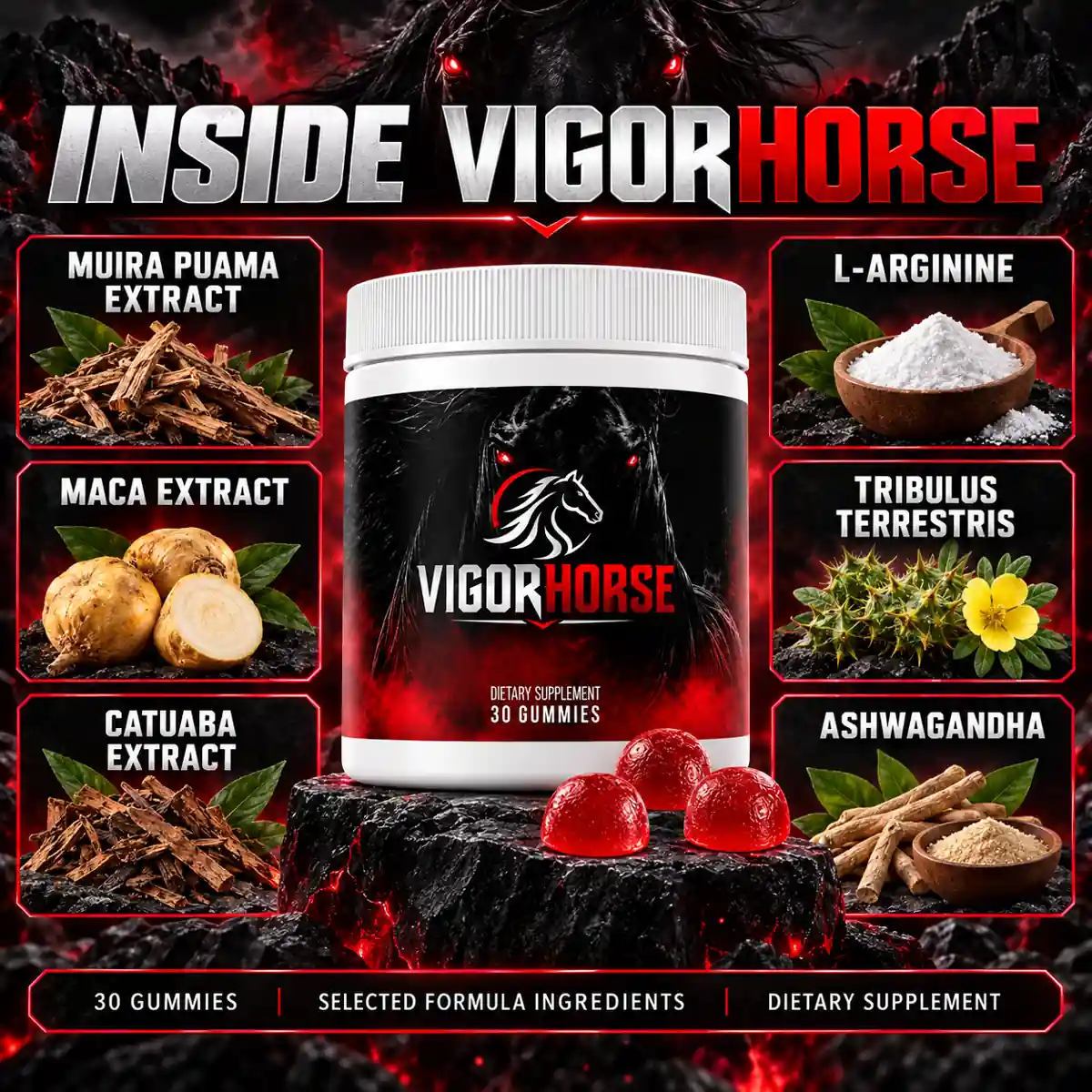
- Those human test doses run from 370 mg to more than a gram. On this jar, horny goat weed extract is the last of 9 names on an 82 mg blend line, which caps it at 5 mg or less.
- Researchers have built nanoparticle delivery systems specifically to work around icariin’s “reduced oral absorption,” in one formulation paper’s own words. Engineering a fix is itself evidence the underlying problem is real.
The enzyme finding, and the question it leaves open
A separate deep-dive on this site covers icariin’s best-documented research program: seven rat studies over two decades showing the compound affects nitric oxide synthase expression in penile tissue when delivered directly. That is a real, repeated, peer-reviewed finding, and it is not the subject of this page.
This page asks the question those studies do not answer: once a person swallows icariin, in a gummy or any other oral form, does the molecule that did that work in rat tissue survive digestion and reach the bloodstream unchanged? An effect measured after direct tissue exposure or injection says nothing on its own about oral absorption. That is a pharmacokinetics question, it has its own dedicated literature, and three separate lines of that literature — a rat comparison study, a human-gut-bacteria experiment, and a human clinical trial — all point the same direction.
What happens to icariin in a rat, measured directly
Cheng and colleagues (2015) built a validated UPLC-MS/MS method sensitive enough to measure icariin and one of its breakdown products, icariside II, in the same blood sample, then dosed rats both orally and intravenously to compare what happened.
| Route of administration | Share of icariin converted to icariside II |
|---|---|
| Oral (intragastric) | 91.2% |
| Intravenous | 0.4% |
Bypassing digestion by dosing directly into a vein left icariin almost entirely intact. Dosing by mouth converted the overwhelming majority of it. That contrast is the paper’s central finding.
The same study found that after oral dosing, icariside II’s peak blood concentration and total exposure (Cmax and AUC) were 3.8 and 13.0 times higher, respectively, than icariin’s own. In plain terms: whatever ends up circulating in a rat’s blood after it swallows icariin is mostly a different molecule, not icariin itself. The intravenous comparison rules out the bloodstream as the site of that conversion — it is happening during digestion and first-pass processing, before much of the original compound ever gets that far.
What gut bacteria do to it before it is absorbed
Two further papers identify where in digestion that conversion happens, and the short answer is: in more than one place at once.
Wu, Kim, and Han (2016) isolated three bacterial strains from human intestinal flora — species of Streptococcus, Enterococcus, and Blautia — and reacted each with icariin under anaerobic conditions to see what they produced. All three converted it, generating icariside II, icaritin, and desmethylicaritin, though not icariside I. The authors’ own conclusion is direct: “most icariin is quickly transformed to icariside II before absorption in the human intestine,” and they propose that pharmacokinetic work on this ingredient should track those metabolites rather than the parent compound.
A second paper, Zhou and colleagues (2013), compared two separate metabolic routes side by side: a brush-border intestinal enzyme called lactase phlorizin hydrolase, and the resident gut flora. Testing five related Epimedium flavonoid glycosides, they found icariin was the fastest-metabolized compound of the five by both routes, and that the enzyme pathway worked even faster than the bacterial one.
| Metabolic route tested | Speed, relative to the other four Epimedium glycosides tested |
|---|---|
| Intestinal enzyme (lactase phlorizin hydrolase) | Fastest of the five; converts icariin quicker than bacterial flora does |
| Intestinal bacterial flora | Also converts icariin fastest of the five, but more slowly than the enzyme route |
Two independent mechanisms in the human gut, an enzyme and a population of bacteria, both single out icariin as the quickest of five related compounds to be broken down. That is not one exotic finding; it is two separate lines of evidence for the same conclusion.
The human trial, and what actually showed up in blood
Rat data and isolated-bacteria experiments both point toward rapid conversion, but the paper that settles the question for a person is a human clinical trial, and it is worth reading in full.
Teo and colleagues (2019), working out of the National University of Singapore, gave 30 healthy male subjects a single oral dose of a standardized Epimedium prenylflavonoid extract at 370, 740, or 1,110 milligrams, in a randomized, placebo-controlled design. They drew serum over 48 hours and measured icariin, icariside I, icariside II, icaritin, and desmethylicaritin by LC-MS/MS.
| Compound measured | Detected in serum at any dose? | Detail |
|---|---|---|
| Icariin (the parent compound) | No | Below detection limits at all three doses |
| Icariside I | No | Below detection limits at all three doses |
| Icaritin | No | Below detection limits at all three doses |
| Icariside II | Yes | Peak (Tmax) 4.1–4.3 hours after dosing |
| Desmethylicaritin | Yes | Peak (Tmax) 24.1–24.4 hours; exposure rose with dose |
Thirty healthy men, doses up to 1,110 mg of extract, and icariin itself never reached a measurable level in blood. This is the paper’s own reported result, not an inference from it.
Put the dose in perspective: the highest arm in this trial, 1,110 mg, is roughly 13 times the entire weight of the shared 82 mg blend line on a VigorHorse gummy, before accounting for the other eight names sharing that total. And at that dose, in healthy men, using a method sensitive enough to quantify the metabolites down to low nanogram-per-millilitre levels, icariin itself still did not appear. What did circulate, reliably and dose-dependently, were icariside II and desmethylicaritin — two different molecules from the one printed on an ingredient list.
Where icariin sits on the VigorHorse panel
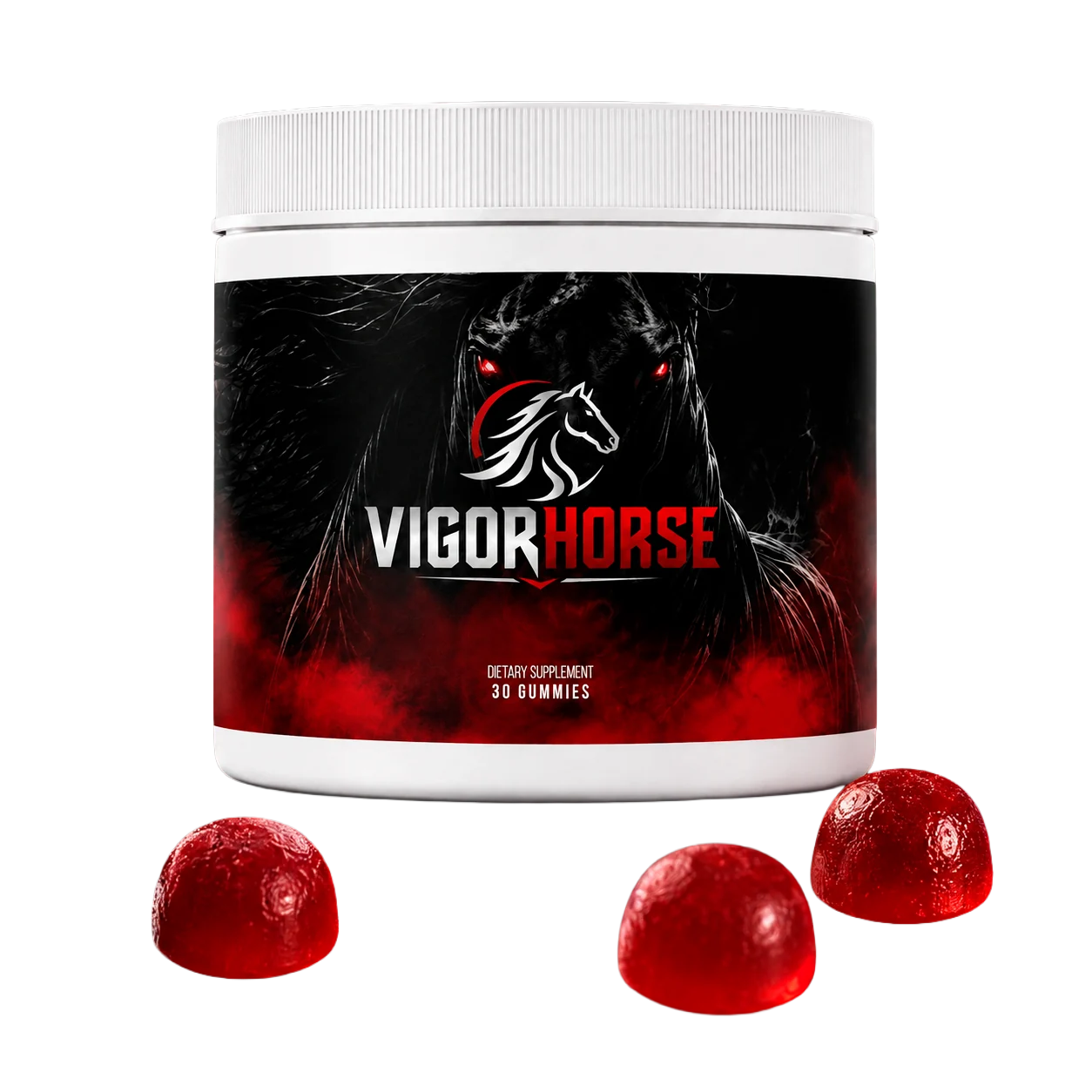
Printed as Horny Goat Weed Extract, ninth and last of 9 names on the shared 82 mg blend line, with no separate milligram figure of its own.
Order VigorHorseOne gummy a day · 60-day money-back guarantee
Why formulators are building delivery systems around this
If icariin’s absorption were not a genuine obstacle, nobody in the drug-delivery field would be spending research budget solving it. They are.
Asfour and colleagues (2022) open their paper by stating the problem plainly: icariin “displays reduced oral absorption, and therefore, low bioavailability hindered its clinical application.” Their response was to build a zein-stabilized nanosphere carrier, tested against raw icariin at an identical dose (20 mg/kg) in male Wistar rats.
The engineered formulation outperformed raw icariin on every sexual-behavior measure the study tracked: mount latency and ejaculation latency were both cut to roughly half of raw icariin’s figures, and intromission latency dropped by 41%. That result is worth taking at face value for what it is — evidence that a nanoparticle carrier can improve on raw icariin’s performance in rats. It is also, by the paper’s own framing, an admission that raw icariin’s oral performance was the problem being solved. A specialized nanocarrier delivered by injection-equivalent gavage in a research setting is not the same delivery method as a chewable gummy, and no equivalent formulation exists inside a proprietary blend line.
What this means on a 9-name blend line
VigorHorse’s Supplement Facts panel prints Horny Goat Weed Extract last of 9 names sharing one 82 mg proprietary blend line, with caffeine broken out separately at 5 mg. Because the label lists names in descending order of predominance, and caffeine sits fifth at 5 mg, everything printed after it — including horny goat weed extract in last place — weighs 5 mg or less per gummy.
Set that beside the one human study that ever looked for icariin in blood: doses of 370 to 1,110 mg of standardized extract, and still no detectable icariin, only its metabolites. A blend-line amount of 5 mg or less of horny goat weed extract sits between roughly 74 and 222 times smaller than the lowest dose tested in that trial, on an ingredient whose own parent compound could not be detected in blood at that much larger amount.
This is not a claim that horny goat weed extract does nothing, or that the rat enzyme studies covered in the sibling article are wrong — they measured a real effect from direct tissue exposure. It is also not a claim about icariin’s metabolites, icariside II and desmethylicaritin, which do circulate in blood and have their own separate pharmacology not evaluated in trials of icariin itself. What this page establishes is narrower: a claim that rests on icariin, specifically, reaching the bloodstream intact at a gummy-line dose is not supported by the only human pharmacokinetic data that has directly looked for it.
What to take from all of this
- Icariin converts to other compounds fast. A rat study found 91.2% conversion after oral dosing, versus 0.4% after an intravenous dose that skips digestion.
- At least two separate gut mechanisms do that conversion — a digestive enzyme and resident bacteria — and both single out icariin as the quickest of several related compounds to break down.
- In the one human trial that measured it, icariin itself was never detected in blood, at doses from 370 mg to 1,110 mg. Only its metabolites, icariside II and desmethylicaritin, showed up.
- A gummy-line dose is far smaller than any of those tested amounts. Horny goat weed extract sits last on a 9-name, 82 mg blend line, capped at 5 mg or less.
- Formulators building nanoparticle carriers specifically to fix icariin’s absorption is independent confirmation the underlying problem is recognized in the pharmaceutical-sciences literature, not just an inference from the pharmacokinetics papers.
None of this overturns the enzyme finding covered elsewhere on this site. It adds the step that finding leaves out: what happens between swallowing and the bloodstream, for this specific compound, is a well-documented obstacle rather than a formality.
References
- Cheng T, Zhang Y, Zhang T, Lu L, Ding Y, Zhao Y. Comparative Pharmacokinetics Study of Icariin and Icariside II in Rats. Molecules. 2015;20(12):21274-21286. PMID 26633326. https://pubmed.ncbi.nlm.nih.gov/26633326/
- Wu H, Kim M, Han J. Icariin Metabolism by Human Intestinal Microflora. Molecules. 2016;21(9):1158. PMID 27589718. https://pubmed.ncbi.nlm.nih.gov/27589718/
- Zhou J, Chen Y, Wang Y, Gao X, Qu D, Liu C. A comparative study on the metabolism of Epimedium koreanum Nakai-prenylated flavonoids in rats by an intestinal enzyme (lactase phlorizin hydrolase) and intestinal flora. Molecules. 2013;19(1):177-203. PMID 24368601. https://pubmed.ncbi.nlm.nih.gov/24368601/
- Teo YL, Cheong WF, Cazenave-Gassiot A, Ji S, Logan S, Lee ZXK, Li J, Seng KY, Lee LS, Yong EL. Pharmacokinetics of Prenylflavonoids following Oral Ingestion of Standardized Epimedium Extract in Humans. Planta Med. 2019;85(4):347-355. PMID 30522143. https://pubmed.ncbi.nlm.nih.gov/30522143/
- Asfour HZ, Alhakamy NA, Fahmy UA, Ahmed OAA, Rizg WY, Felimban RI, Abdel-Naim AB, Abourehab MAS, Mansouri RA, Omar UM, Badr-Eldin SM. Zein-Stabilized Nanospheres as Nanocarriers for Boosting the Aphrodisiac Activity of Icariin: Response Surface Optimization and In Vivo Assessment. Pharmaceutics. 2022;14(6):1279. PMID 35745852. https://pubmed.ncbi.nlm.nih.gov/35745852/