VigorHorse Official Website › Blog › Icariin, The Animal Studies
Icariin: The Animal Studies On Erectile Blood Flow
Icariin, the active compound behind horny goat weed, has a two-decade research trail focused specifically on erectile tissue and nitric oxide signalling. It is a real, mechanistically detailed body of work. It is also, so far, entirely a rat literature. This article reads seven of those studies and is precise about what species did the responding.
- Icariin has been tested for erectile function in at least seven published rat studies since 2004, spanning castrated rats, hypertensive rats, diabetic rats, arterial-injury rats, and radiation-damaged rats.
- The consistent mechanism across almost all of them is nitric oxide synthase (NOS) activity in the corpus cavernosum — icariin has repeatedly been shown to increase eNOS expression or activity and to counter eNOS “uncoupling,” a dysfunction that reduces nitric oxide output.
- Doses used ranged from about 1 to 10 mg per kilogram of body weight per day, given orally to rats for periods of two to nine weeks depending on the study.
- No study found for this article gave purified icariin, alone, by mouth, to a human being and measured erectile function.
- This is a real and fairly deep mechanism literature. It answers “does icariin affect nitric oxide signalling in penile tissue” in rats. It does not yet answer whether an oral human dose does the same thing.
Where icariin research on erectile tissue began
Horny goat weed, botanically Epimedium, carries a centuries-old reputation in Chinese herbal medicine, and modern pharmacology research on it has focused almost entirely on one flavonoid glycoside inside it: icariin. Unlike some traditional ingredients where the modern research drifts away from the traditional claim, icariin’s research program stayed remarkably close to it — nearly every paper found for this article tested erectile tissue specifically, not memory, mood, or bone density.
What sets this literature apart from some other names on a vitality blend line is that it is not one lab’s isolated project. Several different Chinese urology and andrology research groups, publishing across two decades, converged on the same experimental question and largely the same answer. That consistency is worth taking seriously. It is also entirely built on one species.
The castrated-rat studies
The earliest work in this line used a castration model, a standard way to study testosterone-dependent erectile decline without the confound of aging.
Chen and colleagues (2005) gave castrated Wistar rats oral icariin at roughly 1 to 5 mg/kg per day for four weeks, then measured intracavernosal pressure — the standard rat proxy for erectile rigidity — alongside nitric oxide synthase isoform expression in penile tissue. Icariin improved both measures relative to untreated castrated controls.
Tian and colleagues (2004) ran a related design in rats with surgically induced arteriogenic erectile dysfunction — blood flow restricted by ligating a supplying artery rather than by castration — using oral icariin at roughly 5 to 10 mg/kg per day for thirty days. Intracavernosal pressure and endothelial NOS expression both recovered in the treated group relative to the untreated injury group.
| Study | Model | Dose & duration | Result |
|---|---|---|---|
| Chen and colleagues, 2005 | Castrated Wistar rats | ~1–5 mg/kg/day, oral, 4 weeks | Improved intracavernosal pressure and NOS isoform expression |
| Tian and colleagues, 2004 | Arterial-ligation rat model of ED | ~5–10 mg/kg/day, oral, 30 days | Restored intracavernosal pressure and eNOS expression |
Two different rat injury models, one hormonal and one vascular, with a consistent readout: icariin moved intracavernosal pressure and NOS expression back toward normal in both.
The hypertensive-rat program
A separate, more recent research thread used spontaneously hypertensive rats (SHR), a strain bred to develop high blood pressure and, with it, vascular erectile dysfunction — a model closer to the age-related, blood-pressure-linked erectile decline seen in many men, even though the animal is still a rat.
Liu and colleagues (2021) gave SHR rats oral icariin at 10 mg/kg per day for four weeks and found it improved erectile function by strengthening the binding between eNOS and a chaperone protein (HSP90) while weakening an inhibitory interaction (eNOS-caveolin-1) — a specific, mechanistically detailed protein-interaction finding, not just an outcome measurement.
Long and colleagues (2018), using the same SHR model, found icariin reduced “eNOS uncoupling” — a state where the enzyme that normally produces nitric oxide instead produces damaging free radicals — by increasing a cofactor (tetrahydrobiopterin) the enzyme needs to function correctly.
eNOS uncoupling is a genuine concept in vascular biology, not marketing language: it describes a well-characterized failure mode of the same enzyme system that Viagra-class drugs work downstream of. Two separate papers, from the same broader research group, found icariin corrected it in this rat strain.
Diabetic rats and radiation-injured rats
The same research question has also been tested in diabetic and radiation-injury models, which are closer analogues to the medical and treatment-related causes of erectile dysfunction in men, again still in rats.
Xin and colleagues (2012) tested icariside II, a related Epimedium-derived compound, in rats with streptozotocin-induced diabetes and reported improved erectile function.
Deng and colleagues (2022) is the most recent and arguably most translational-feeling design: rats received prostate-area radiation at a clinically relevant total dose, meant to model the erectile dysfunction that follows prostate radiotherapy in men, alongside oral icariin at 10 mg/kg per day. Nine weeks later, the icariin group showed better erectile function and suppressed markers of mitochondria-associated membrane stress, plus restored eNOS activity, compared to irradiated rats given no icariin.
| Model | What it mimics in humans | Icariin dose |
|---|---|---|
| Streptozotocin-diabetic rats | Diabetes-related erectile dysfunction | Icariside II, oral |
| Prostate-irradiated rats | Erectile dysfunction after prostate radiotherapy | 10 mg/kg/day, oral, 9 weeks post-injury |
The mechanism that repeats across all of them
Reading these seven studies end to end, what stands out is not any single result but the consistency of the mechanism across four different injury models — castration, arterial ligation, spontaneous hypertension, diabetes, and radiation. In every one, icariin’s reported effect runs through the same enzyme system: endothelial nitric oxide synthase activity or expression in the corpus cavernosum, either increased directly or protected from a dysfunctional state.
That consistency is genuinely notable as pharmacology. A compound producing the same molecular signature across four unrelated disease models, in the hands of more than one research group, is a stronger basis for taking a mechanism seriously than a single lab's isolated finding. It is the kind of convergent evidence that makes a compound worth continued study.
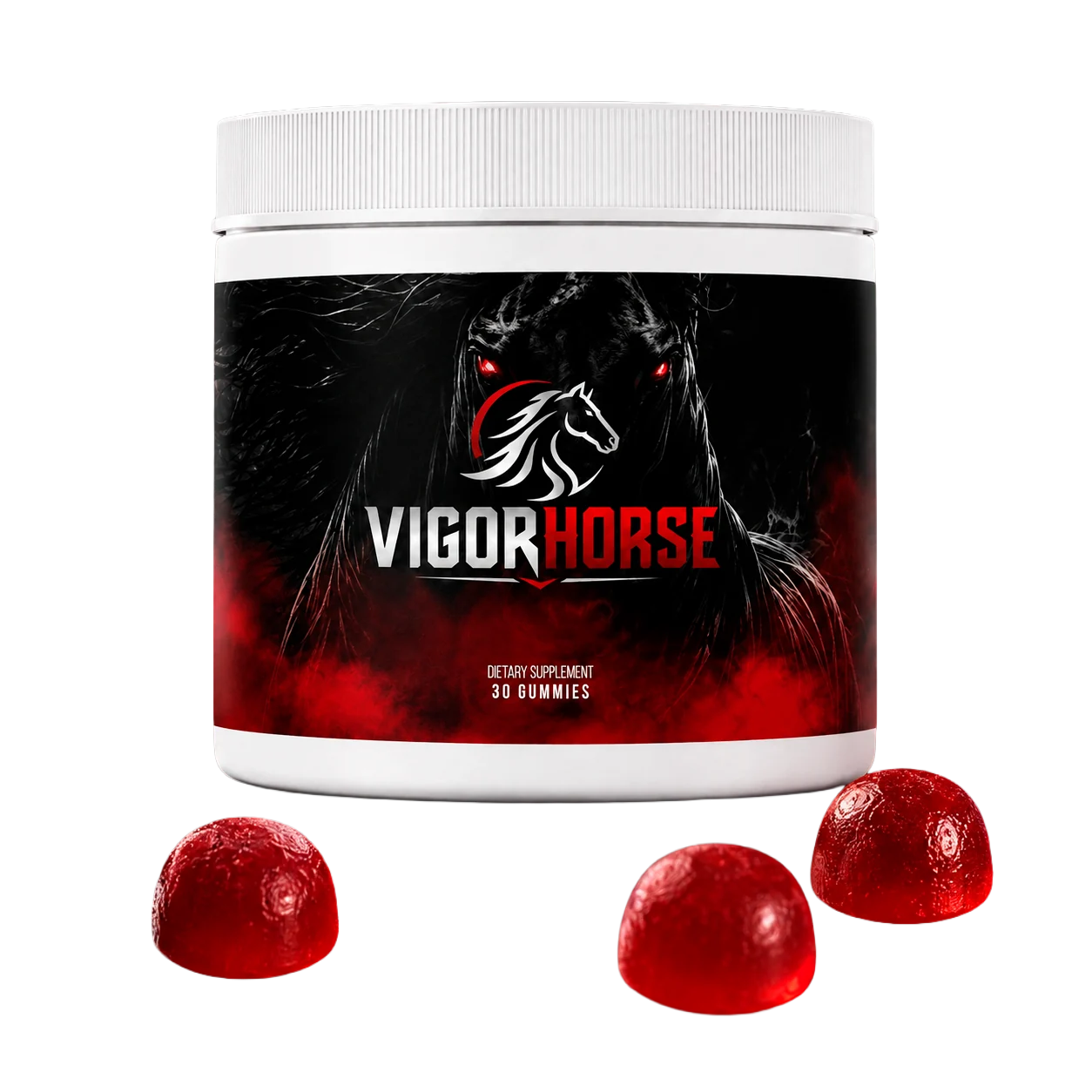
See where icariin sits on the VigorHorse panel
Listed as Horny Goat Weed (Icariin), one of eight named actives sharing this jar’s blend line. The ingredients page lists every name in order.
Order VigorHorseOne gummy a day · 60-day money-back guarantee
What the animal-to-human gap actually means
“Convergent rat evidence for a mechanism” and “a demonstrated human effect” are two different claims, and the difference is not a technicality. Rat corpus cavernosum tissue, rat dosing by body weight, and rat metabolism of an oral compound are all specific to that species. A dose that works out to 10 mg per kilogram in a roughly 300-gram rat does not translate to the same number of milligrams per kilogram in a person by simple arithmetic; interspecies dose scaling is its own field of pharmacology precisely because direct unit conversion is unreliable.
More basically: none of the seven studies above gave icariin, alone, orally, to a human subject and measured an erectile-function or blood-flow endpoint. That specific trial, as far as this research could determine, has not been published. What exists is a well-replicated animal mechanism story and, separately, the traditional-use reputation the ingredient is marketed on. The two are related but not the same evidence.
It supports the statement that icariin has a real, repeatedly observed effect on nitric oxide signalling in rat erectile tissue across several disease models. It does not support a specific claim about what an oral human dose of icariin, at any amount, does to a person’s erectile function, because that experiment has not yet been published.
Where icariin sits on this label
The VigorHorse Supplement Facts panel lists Horny Goat Weed (Icariin) among eight named actives sharing one 82 mg blend total. As with every name on that line, the panel does not break out how many of those 82 milligrams are icariin specifically, and the rat studies above used doses scaled to body weight in milligrams per kilogram, which is not a unit a blend-total label reports in the first place.
Reading an icariin claim honestly after this research means holding two things at once: a genuinely consistent, multi-model rat mechanism story, and the fact that the specific oral-human-dose experiment implied by a vitality-gummy marketing claim does not yet exist in the published literature.
References
- Chen L, Xin ZC, Liu WJ, Yuan YM, Tian L, Guo YL. Effects of icariin on erectile function and expression of nitric oxide synthase isoforms in castrated rats. Asian J Androl. 2005;7(4):381-388. PMID 16281085. https://pubmed.ncbi.nlm.nih.gov/16281085/
- Tian L, Xin ZC, Liu WJ, Yang YM, Liu G, Chen L, Fu J, Wang LL. Effects of icariin on the erectile function and expression of nitrogen oxide synthase isoforms in corpus cavernosum of arteriogenic erectile dysfunction rat model. Zhonghua Yi Xue Za Zhi. 2004;84(11):954-957. PMID 15329286. https://pubmed.ncbi.nlm.nih.gov/15329286/
- Liu QW, Yang ZH, Jiang J, Jiang R. Icariin modulates eNOS activity via effect on post-translational protein-protein interactions to improve erectile function of spontaneously hypertensive rats. Andrology. 2021;9(1):342-351. PMID 33507631. https://pubmed.ncbi.nlm.nih.gov/33507631/
- Long H, Jiang J, Xia J, Jiang R. Icariin improves SHR erectile function via inhibiting eNOS uncoupling. Andrologia. 2018;50(9):e13084. PMID 29968380. https://pubmed.ncbi.nlm.nih.gov/29968380/
- Xin H, Zhang WD, Xin ZC, et al. Effects of icariside II on improving erectile function in rats with streptozotocin-induced diabetes. J Androl. 2012;33(5):923-931. PMID 22403279. https://pubmed.ncbi.nlm.nih.gov/22403279/
- Deng CJ, Li X, Zeng Y, Jiang J, Jiang R. Icariin inhibits the formation of mitochondria-associated membranes (MAMs) and improves erectile function in rats treated with prostate radiation. Andrology. 2022;10(6):1208-1216. PMID 35765205. https://pubmed.ncbi.nlm.nih.gov/35765205/