VigorHorse Official Website › Blog › Interactions Worth Knowing Before You Start
Interactions Worth Knowing Before You Start
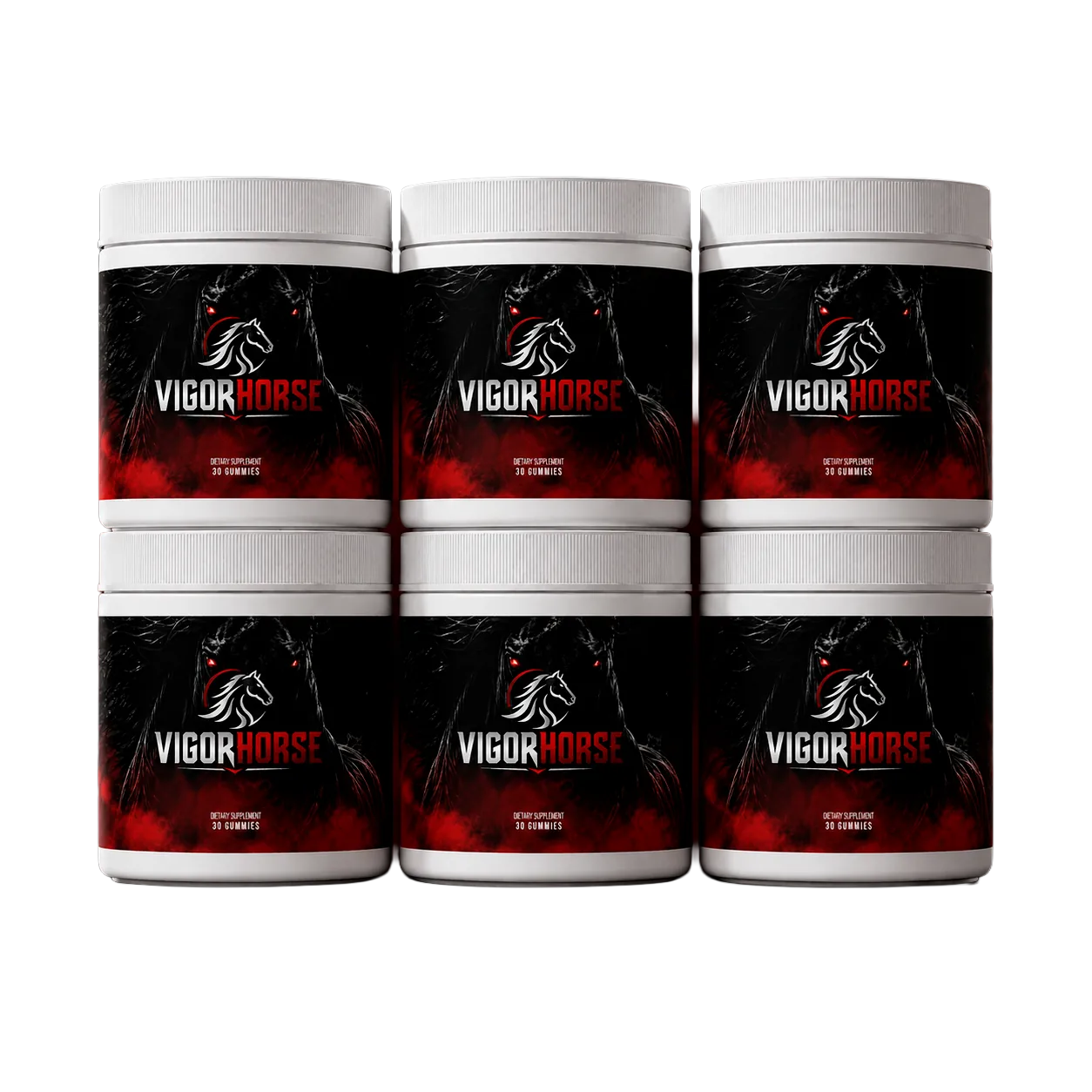
None of the eight named ingredients on this jar is a prescription drug. But two of the mechanisms behind them — nitric-oxide-mediated vasodilation and blood-pressure lowering — are the same mechanisms that make one well-known prescription combination dangerous, and a decades-old clinical framework already tells clinicians to ask about supplements like this one before surgery. Here is what that framework says, applied to this specific label.
- None of VigorHorse’s 8 named ingredients is a prescription drug, but two mechanisms behind them — nitric-oxide support and blood-pressure lowering — are the same ones behind a well-documented prescription-drug interaction.
- A 2001 JAMA review already set the clinical framework: ask about herbal supplement use before surgery, because of bleeding, blood-pressure, and sedation risks. None of the eight herbs it names by name are on this label, but the framework still applies.
- A dose-response meta-analysis of L-arginine supplementation found it measurably lowers blood pressure across randomised trials — the same direction of effect that makes combining a nitrate drug with a PDE-5 inhibitor drug dangerous.
- Icariin, the source of Horny Goat Weed Extract on this label, does measurably inhibit the same enzyme those prescription drugs target, though far more weakly and, per a companion article on this site, it barely reaches the bloodstream intact at a gummy dose.
- None of this is a claim that a 5 mg-or-less blend-line dose is dangerous on its own. It is a case for bringing this jar’s printed ingredient line, not just its brand name, to any conversation with a prescriber or before a scheduled procedure.
Why a “natural” product still has an interactions question
Dietary supplements are not reviewed by the FDA for drug interactions before they reach a shelf. That is a statement about the regulatory category, not a claim about this product specifically, and it means the burden of checking falls on the person taking it and whoever prescribes their other medications. “Natural” and “plant-derived” describe where an ingredient came from. They say nothing about whether it shares a mechanism with something already in someone’s medicine cabinet.
This page does not claim any of VigorHorse’s eight named ingredients is dangerous at the amount printed on this jar’s blend line. It asks a narrower, checkable question for each one: does the published literature tie this ingredient to a mechanism that also matters for a prescription drug class, and if so, which one?
It also helps to separate two different kinds of interaction, because the rest of this page uses both. A pharmacokinetic interaction changes how much of a substance ends up in the bloodstream — one compound speeding up or slowing down how fast another is absorbed, metabolised, or cleared. A pharmacodynamic interaction changes what happens once a substance is already there — two things pulling the same physiological lever, such as blood pressure, in the same direction at the same time, so their effects add up even though neither caused the other. The nitrate-and-PDE-5 story below is a pharmacodynamic interaction: both drug classes lower blood pressure through related pathways, and combining them can push the total drop further than either produces alone. That is the pattern worth watching for across this jar’s own ingredient list, not a claim that any single name here acts like a drug.
The clinical framework: why surgeons ask about supplements
Ang-Lee, Moss, and Yuan (2001), writing in JAMA, reviewed the eight most commonly used herbal medications for perioperative safety concerns and built the framework anesthesiologists still use today.
| Herb reviewed | Concern identified |
|---|---|
| Garlic, ginkgo, ginseng | Bleeding risk |
| Ephedra | Cardiovascular instability |
| Ginseng | Hypoglycemia |
| Kava, valerian | Potentiation of anesthetic sedation |
None of these eight herbs, by name, appear on VigorHorse’s ingredient list. Worth stating plainly, because it means this specific review does not name a concern about this specific product.
The paper’s lasting contribution is not that particular list. It is the method: identify what mechanism an herbal ingredient has, then check whether that mechanism overlaps with a planned procedure, an anesthetic, or an existing medication. Applying that same method to VigorHorse’s own label, rather than assuming the absence of these eight specific herbs means the question is closed, is what the rest of this page does.
L-Arginine, blood pressure, and the nitrate rule
Two facts, read together, are the reason this section exists. Neither is new information on its own; the combination is what matters.
First: Shiraseb and colleagues (2022) ran a systematic review and dose-response meta-analysis of randomised, placebo-controlled trials testing oral L-arginine supplementation against blood pressure in adults, and found a measurable blood-pressure-lowering effect, in a dose-dependent pattern, across the pooled trial data.
Second: Kloner and colleagues (2018) reviewed the well-established interaction between organic nitrate medications, prescribed for angina and heart failure, and PDE-5 inhibitor drugs, prescribed for erectile dysfunction. Both drug classes are vasodilators. Combined, their hypotensive effects can synergise dangerously, which is why PDE-5 inhibitor drugs carry an explicit contraindication against use with nitrates.
L-arginine is not a PDE-5 inhibitor. It is the amino acid substrate the body uses to make nitric oxide in the first place, working earlier in the same pathway those drugs act on downstream. Its own directly measured effect, an independent blood-pressure reduction shown across randomised trials, is the relevant fact here: for someone already on a blood-pressure medication or a prescribed nitrate, adding another blood-pressure-lowering input — however mild the ingredient, however small the gummy-line dose — is information worth having, not a reason for alarm on its own.
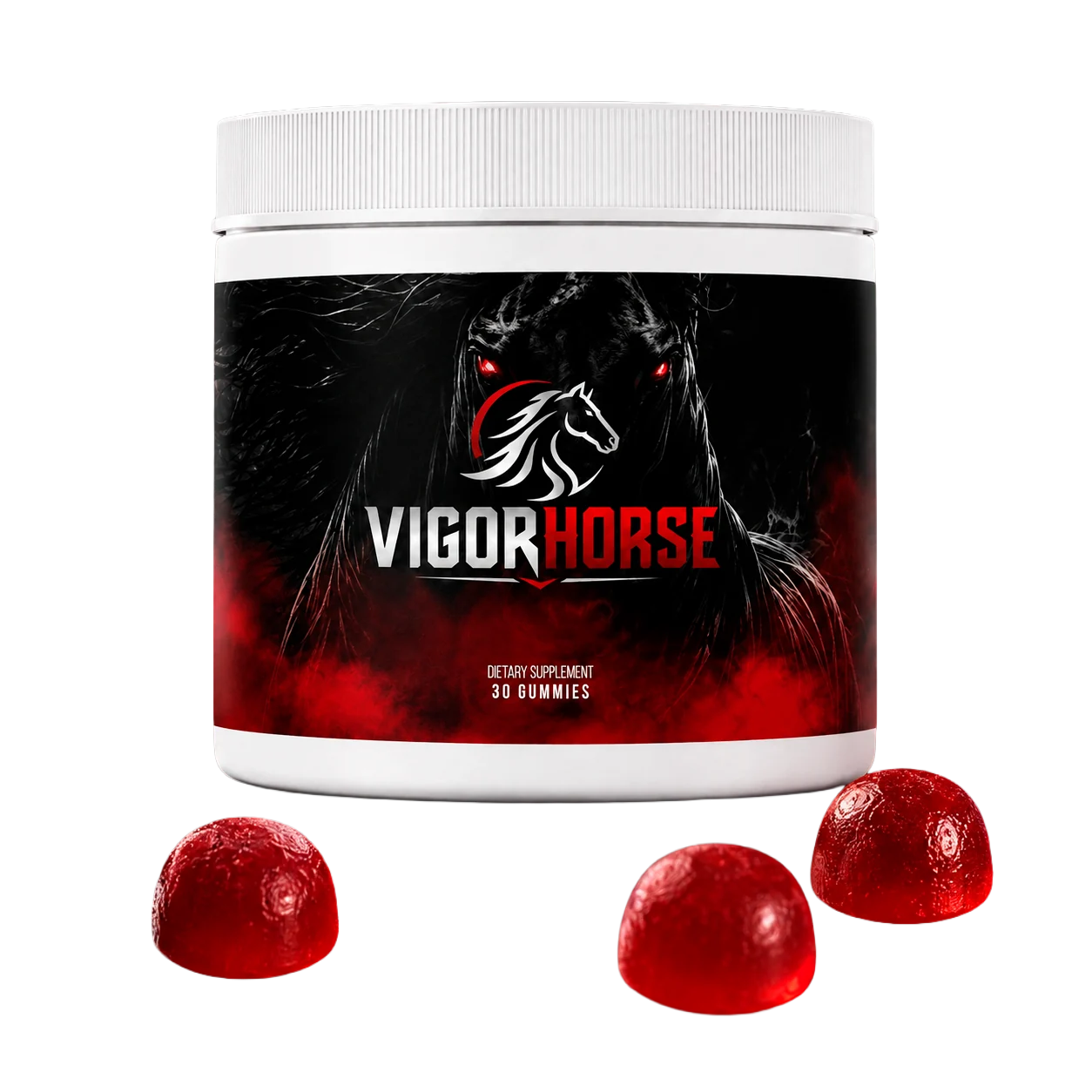
See the full blend line before you ask a pharmacist
Nine names on one 82 mg line, printed in descending order of predominance, transcribed in full on the ingredients page.
Order VigorHorseOne gummy a day · 60-day money-back guarantee
Icariin’s own enzyme activity, and why it matters here
Horny Goat Weed Extract, last of 9 names on this blend line, is the commercial source of icariin, a compound with its own published relationship to the same enzyme, PDE-5, that the prescription drugs in the section above target. That relationship is real and measured directly in laboratory assays, at a potency roughly four orders of magnitude weaker than the prescription drug it is usually compared to.
Two further facts, both covered in more depth in companion articles on this site, matter for how seriously to weigh that finding. The potency gap is large: icariin’s own PDE-5 inhibition is measured in a different order of magnitude entirely from a therapeutic drug dose. And the pharmacokinetics literature shows icariin itself is converted to other compounds so quickly after swallowing that a 2019 human trial could not detect the parent compound in blood even at doses far larger than a gummy blend line could carry.
Put together, those two facts explain why icariin at a blend-line dose is not pharmacologically equivalent to a prescription PDE-5 inhibitor. They do not erase the underlying reason a prescriber would want to know it is on the label at all: the mechanism is directionally the same one behind the nitrate warning above, even if the magnitude is not.
Caffeine, stimulants, and blood pressure medication
Barone and Roberts (1996), in a widely cited review of caffeine consumption, document caffeine’s acute, transient effect on blood pressure and heart rate, most pronounced in people who do not consume it habitually.
At 5 mg per gummy, this jar’s own printed caffeine amount, the acute effect is small on its own. Caffeine intake is additive across a day, though, and anyone actively titrating a blood-pressure medication or managing a heart-rhythm condition has a reason to count every source, gummy included, rather than assume 5 mg is too small to matter simply because it is small.
Ashwagandha, sixth on this same blend line, adds one further reason for care rather than alarm. Its own published trial file, covered in depth on a separate article on this site, is the largest of any ingredient here, and the traditional-medicine literature around it includes use as a mild sedative and stress-modulating herb. That profile has led some clinicians to flag a theoretical, additive interaction with prescribed sedatives or immunosuppressant medications, in the same cautious spirit as the kava and valerian entries in the 2001 perioperative review above. As with the rest of this page, that is a reason to name the ingredient during a medication review, not a claim that a blend-line amount of ashwagandha causes sedation on its own.
Who this is actually relevant to
- Anyone on a prescribed nitrate medication for angina or heart failure. This is the group the nitrate-PDE5 interaction literature addresses most directly, and it is the reason to mention this jar’s full ingredient list to a cardiologist, not just its brand name.
- Anyone on blood-pressure medication, especially during dose titration. L-arginine’s own measured blood-pressure effect is the relevant fact, independent of icariin.
- Anyone with a procedure scheduled during this jar’s 60-day guarantee window. The perioperative framework above exists precisely so a care team can ask the right question before an anesthetic, not after one.
- Anyone stacking this gummy with another stimulant or circulation-support supplement. Caffeine and nitric-oxide-pathway ingredients both compound across products, not just within one jar.
- Everyone else can read this page as what it is: a mechanism summary, not a warning that a 5 mg-or-less blend-line dose is dangerous. The honest use of this information is bringing the label to a conversation, not avoiding the conversation.
This page is not medical advice and does not claim any specific medication combination is unsafe. It summarises published mechanisms so that conversation, if it happens, starts from the actual ingredient list rather than the brand name alone.
What to take from all of this
- The relevant question is mechanism, not brand name. A 2001 clinical framework built for eight different herbs still applies to this jar’s own eight ingredients.
- L-arginine measurably lowers blood pressure across pooled randomised trials, independent of any claim about icariin.
- Nitrate medications and PDE-5-pathway ingredients share a mechanism that is well documented for prescription drugs and directionally relevant, though far weaker in magnitude, for icariin.
- Icariin itself barely reaches the bloodstream at a gummy dose, per this site’s own pharmacokinetics review, which narrows but does not erase the reason to name the mechanism.
- Caffeine is additive across a day’s sources. Five milligrams is small, and it is still worth counting for anyone titrating a heart or blood-pressure medication.
The practical version of all of this fits on one line: a pharmacist or prescriber reading a full ingredient list, printed on a jar or transcribed on this website’s ingredients page, can do this same mechanism check far more precisely than any general-purpose blog article, because they know the rest of a person’s medication list and this page does not. Bringing the list is the useful action here, not memorising the mechanisms above.
References
- Ang-Lee MK, Moss J, Yuan CS. Herbal medicines and perioperative care. JAMA. 2001;286(2):208-216. PMID 11448284. https://pubmed.ncbi.nlm.nih.gov/11448284/
- Kloner RA, Goggin P, Goldstein I, Hackett G, Kirby MG, Osterloh I, Parker JD, Sadovsky R. A New Perspective on the Nitrate-Phosphodiesterase Type 5 Inhibitor Interaction. J Cardiovasc Pharmacol Ther. 2018;23(5):375-386. PMID 29739235. https://pubmed.ncbi.nlm.nih.gov/29739235/
- Shiraseb F, Asbaghi O, Bagheri R, Wong A, Figueroa A, Mirzaei K. Effect of l-Arginine Supplementation on Blood Pressure in Adults: A Systematic Review and Dose-Response Meta-analysis of Randomized Clinical Trials. Adv Nutr. 2022;13(4):1226-1242. PMID 34967840. https://pubmed.ncbi.nlm.nih.gov/34967840/
- Barone JJ, Roberts HR. Caffeine consumption. Food Chem Toxicol. 1996;34(1):119-129. PMID 8603790. https://pubmed.ncbi.nlm.nih.gov/8603790/
- Dell’Agli M, Galli GV, Dal Cero E, Belluti F, Matera R, Zironi E, Pagliuca G, Bosisio E. Potent inhibition of human phosphodiesterase-5 by icariin derivatives. J Nat Prod. 2008;71(9):1513-1517. PMID 18778098. https://pubmed.ncbi.nlm.nih.gov/18778098/